
When a pool or spa loses water
A pool that won’t hold its level, a spa that loses water overnight, or a monthly bill that keeps climbing usually means water is escaping through the pool structure or its plumbing. Professional pool and spa leak detection services across Melbourne and Brevard County use dye testing and pressure testing to identify where water is escaping before any repair begins.
Call (321) 545-2770How Much Water Loss Is Normal?
Some evaporation is normal, especially in Florida’s heat and humidity, and that’s the first thing to check. A simple bucket test compares evaporation against actual water loss. If the pool loses water beyond what evaporation accounts for, a leak is likely.
Ask about the bucket test during your inspection, or perform it yourself and bring the results to your appointment.
Where Do Pool and Spa Leaks Usually Happen?
Leaks tend to appear in a few predictable places: the skimmer, the light niche, the return line, the main drain, tile lines and grout joints, and the plumbing that runs under the deck.
Many pool leaks come from the pool structure itself rather than the plumbing, so both need to be checked. Older pools built before modern plastic fittings became standard are more prone to leaks at these joints.
How Do You Find a Pool Leak?
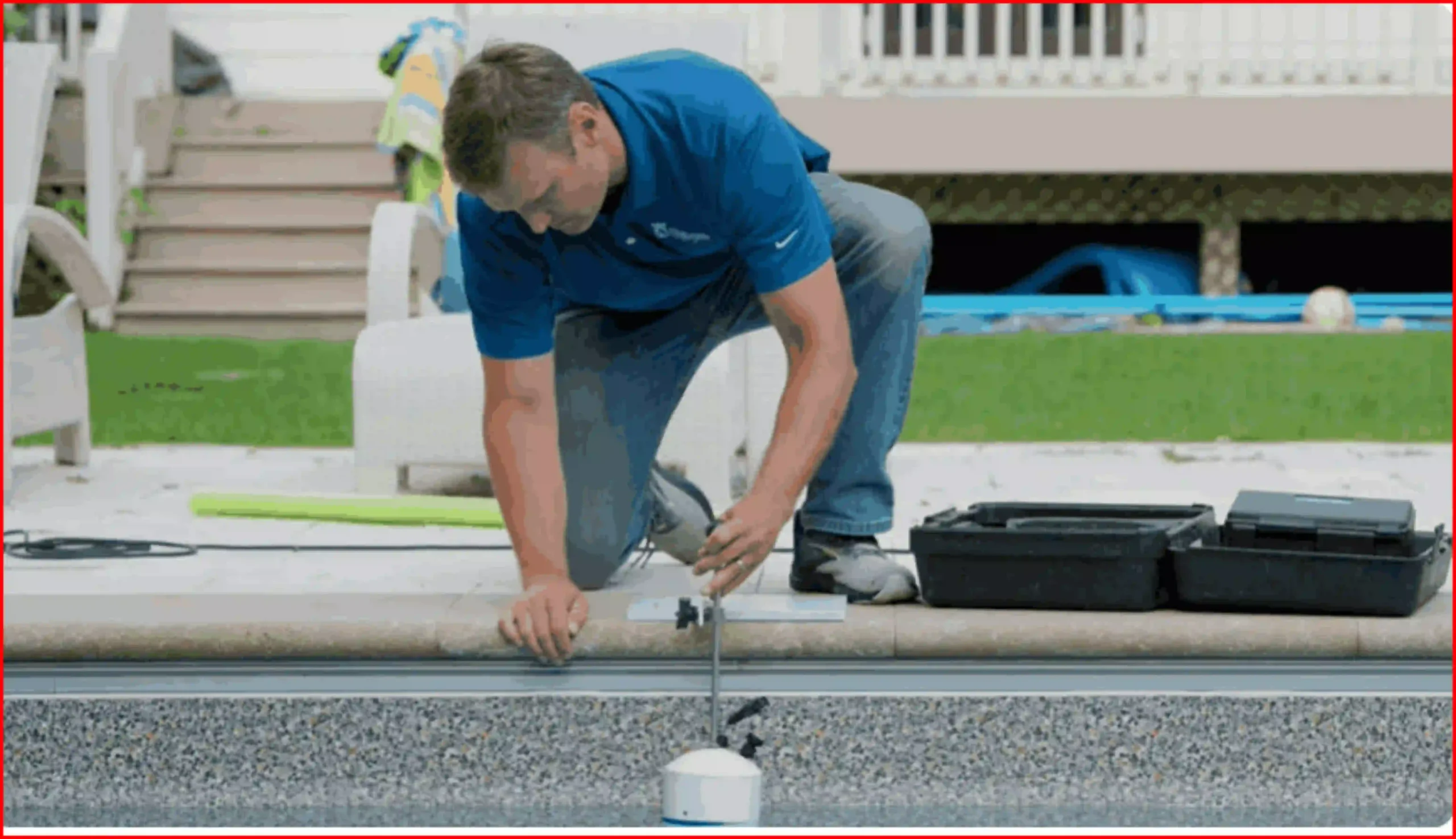
Professional pool leak detection starts with the least invasive testing methods to help identify the source of water loss.
- Bucket Test. Compare pool water loss with normal evaporation to determine whether a leak may be present.
- Dye Testing. Neutral dye is released near the skimmer, light niche, return fittings, and tile lines. If there’s a leak, the dye gets pulled into it.
- Pressure Testing. Plumbing lines are sealed and pressure-tested, usually around 10 to 20 psi. A line that holds pressure is sound. A line that drops points to a possible leak.
- Electronic Listening. For a line that loses pressure, the line can be purged with air. Escaping air makes a sound that can be tracked with a listening device.
- Written Report. Test results, the identified leak location, and recommended repairs are provided in writing.
Why Do Pool Leaks Get Missed?
Leaks at the light niche or the tile line are often hidden by the pool finish and can be easy to misdiagnose as a plumbing problem. Some leaks only appear when the pool is full, and a test done at half level can miss them.
Proper testing at the water level where the leak occurs, along with checking common leak locations, helps identify problems that might otherwise go unnoticed.
What Does Spa Leak Detection Involve?
Spas use smaller plumbing runs and jets, and they’re often installed close to the house, which makes leaks easy to miss.
Spa leak detection involves checking the spa shell, jets, valves, and connected lines using dye and pressure testing methods. The surrounding deck and equipment area are also checked for signs of escaping water.
How Much Does Pool Leak Detection Cost in Melbourne?
The cost of pool leak detection depends on the pool size and type, how many plumbing lines need testing, and the complexity of the leak. A written estimate should be provided before work begins.
Can You Repair the Leak Too?
Pool leak repairs depend on the location and severity of the problem. Some repairs involve pool fittings, tile, decking, or underground plumbing. Identifying the exact leak location helps determine the appropriate repair and avoid unnecessary damage.
Professional Pool and Spa Leak Detection
Pool and Spa Leak Detection Service Areas
Pool and spa leak detection services are available throughout Melbourne, Palm Bay, Viera, Rockledge, Cocoa, Titusville, Satellite Beach, Melbourne Beach, and across Brevard County.
Contact Us for Pool and Spa Leak Detection
Experiencing unexplained water loss in your pool or spa? Get in touch to discuss professional leak detection in Melbourne, FL.
Address:
900 East Strawbridge Avenue
Melbourne, FL 32901, United States
Phone:
(321) 545-2770
Pool inspections near Melbourne
We also provide local information for Indialantic, Satellite Beach, Indian Harbour Beach, and Viera. Visit the Brevard County service-area guide, read about interior moisture inspections, or contact us.